




Google Ads for fintech companies is a paid advertising strategy that helps financial brands reach users actively searching for relevant products and services. High-performing campaigns combine policy compliance, precise audience targeting, and trustworthy landing pages. This guide explains how to build, optimize, and scale Google Ads campaigns that generate qualified fintech leads.
How Google Ads Works for Fintech Businesses Under Strict Policies
Google Ads allows fintech businesses to reach potential customers precisely when they search for financial solutions. Instead of interrupting users with promotional messages, paid search captures existing demand from people already researching products, comparing providers, or preparing to apply.
This makes Google Ads for fintech companies particularly valuable for products involving longer decision cycles. Whether someone is evaluating a lending platform or comparing digital banking apps, search behavior often signals strong commercial intent before a competitor ever enters the conversation.
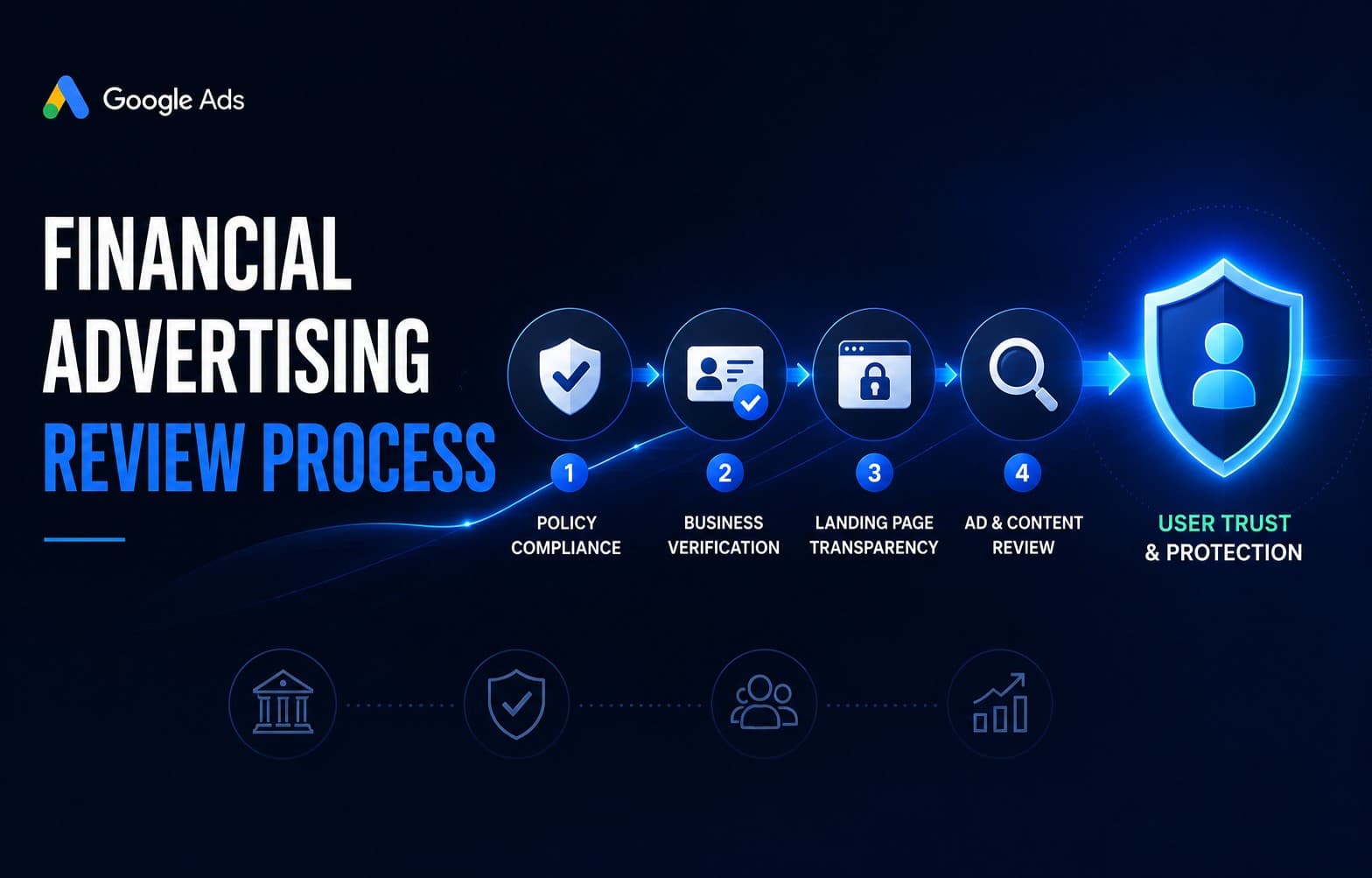
Unlike many industries, however, financial advertising falls under Google’s Your Money or Your Life (YMYL) standards. Because financial decisions directly affect users’ wellbeing, Google evaluates both advertisements and landing pages for transparency, accuracy, and trustworthiness. Official guidance from Google explains that misleading financial claims, unclear pricing, or insufficient business information may result in ad disapprovals or restricted delivery.
The strongest fintech Google advertising strategies consistently demonstrate:
- Accurate financial claims
- Transparent pricing information
- Clear business identification
- Secure website experience
- Easy-to-understand offers
Why Financial Trust Directly Affects Campaign Performance
Clicks alone do not create profitable campaigns. Financial products require users to share personal information, connect bank accounts, or begin applications involving sensitive data. Every additional step introduces uncertainty.
Research published by Google’s Ads policies emphasizes that financial advertisers should clearly disclose fees, repayment terms, eligibility requirements, and licensing information whenever applicable. Clear disclosures reduce ambiguity before prospects begin an application.
A useful way to think about paid advertising for fintech products is that every click starts a trust evaluation. Users are asking several questions before they ever submit a form:
- Is this company legitimate?
- Are the costs clearly explained?
- Will my personal information remain secure?
- Can I verify the provider independently?
| Compliance Area | Why It Matters | Business Impact |
| Business verification | Confirms advertiser legitimacy | Higher approval confidence |
| Transparent pricing | Reduces user uncertainty | Better conversion rates |
| Privacy disclosures | Protects customer information | Greater trust |
| Accurate ad copy | Prevents policy violations | Lower disapproval risk |
| Consistent landing pages | Matches user expectations | Improved Quality Score |
Google also evaluates whether landing pages accurately reflect advertisement claims. If an ad promises instant loan approval but the landing page introduces additional eligibility conditions without explanation, campaign quality may decline regardless of bid strategy.
Financial advertisers should view compliance, user experience, and conversion optimization as one connected system.
Best Google Ads Campaign Types for Fintech Companies
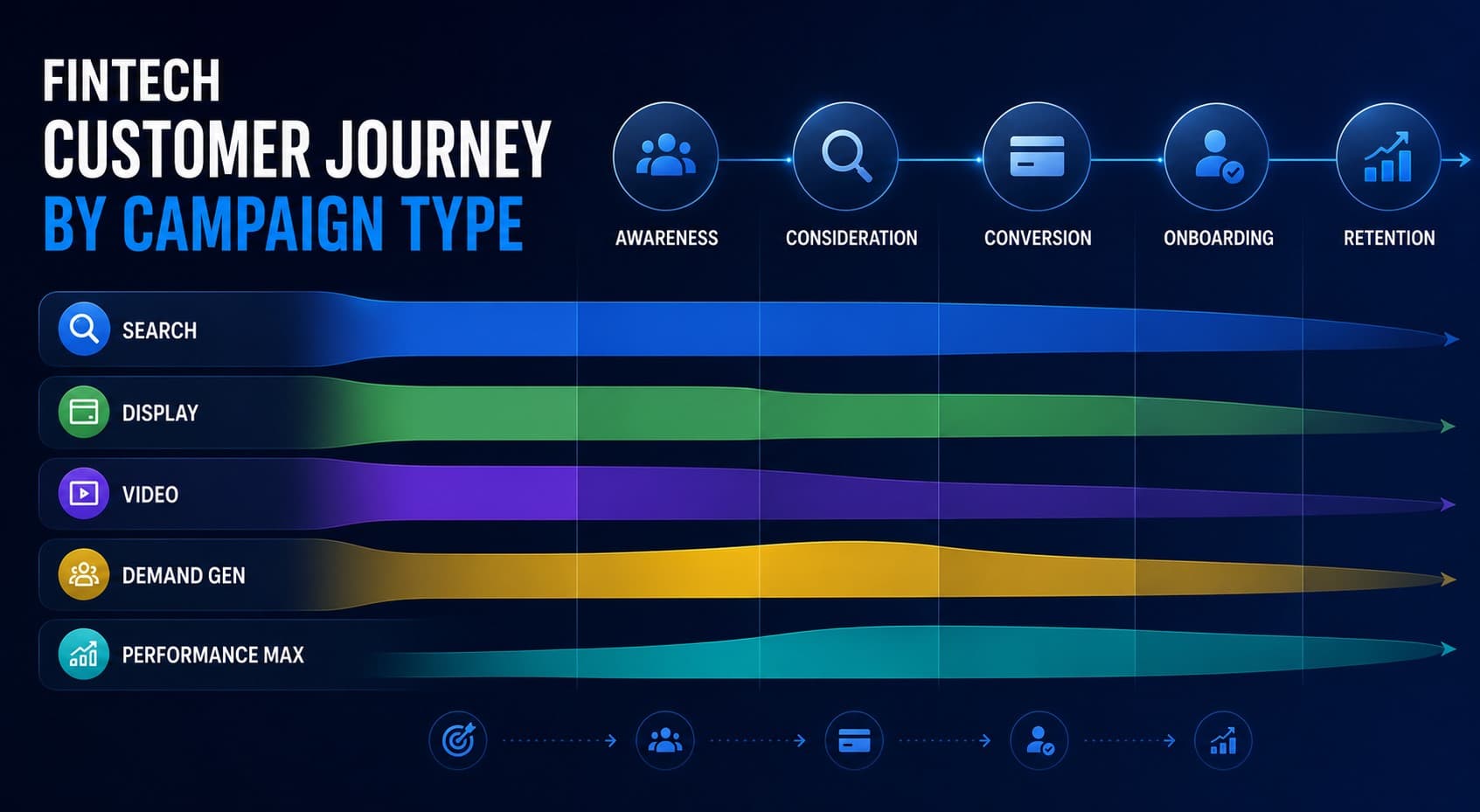
Different Google Ads campaign types support different stages of the customer journey. Search campaigns capture existing demand, while visual formats create awareness among users who may not yet be actively looking for a financial product. The highest-performing paid search strategies combine multiple campaign types instead of expecting one format to achieve every marketing objective.
Search Campaigns
Search campaigns display text ads when users actively search Google using commercial or informational keywords. They remain the highest-intent campaign type because prospects have already expressed a need through their search behavior.
This format performs particularly well for:
- Personal lending platforms
- Digital banking products
- Insurance providers
- Investment platforms
- Payment solutions
Unlike awareness campaigns, Search prioritizes users who are already evaluating options. This makes it one of the strongest formats for fintech user acquisition via paid search, especially when keyword selection focuses on commercial intent instead of broad financial topics.
Search campaigns are the most effective for generating leads, applying for loans, and comparing investment platforms. The main advantage of search campaigns is that they target active buyers. But competition can raise CPCs, so landing pages must be strong enough to convert traffic.
Businesses developing a broader Google Ads strategy should align Search campaigns with high-intent keywords while using additional campaign formats to support earlier stages of the customer journey.
Display Campaigns
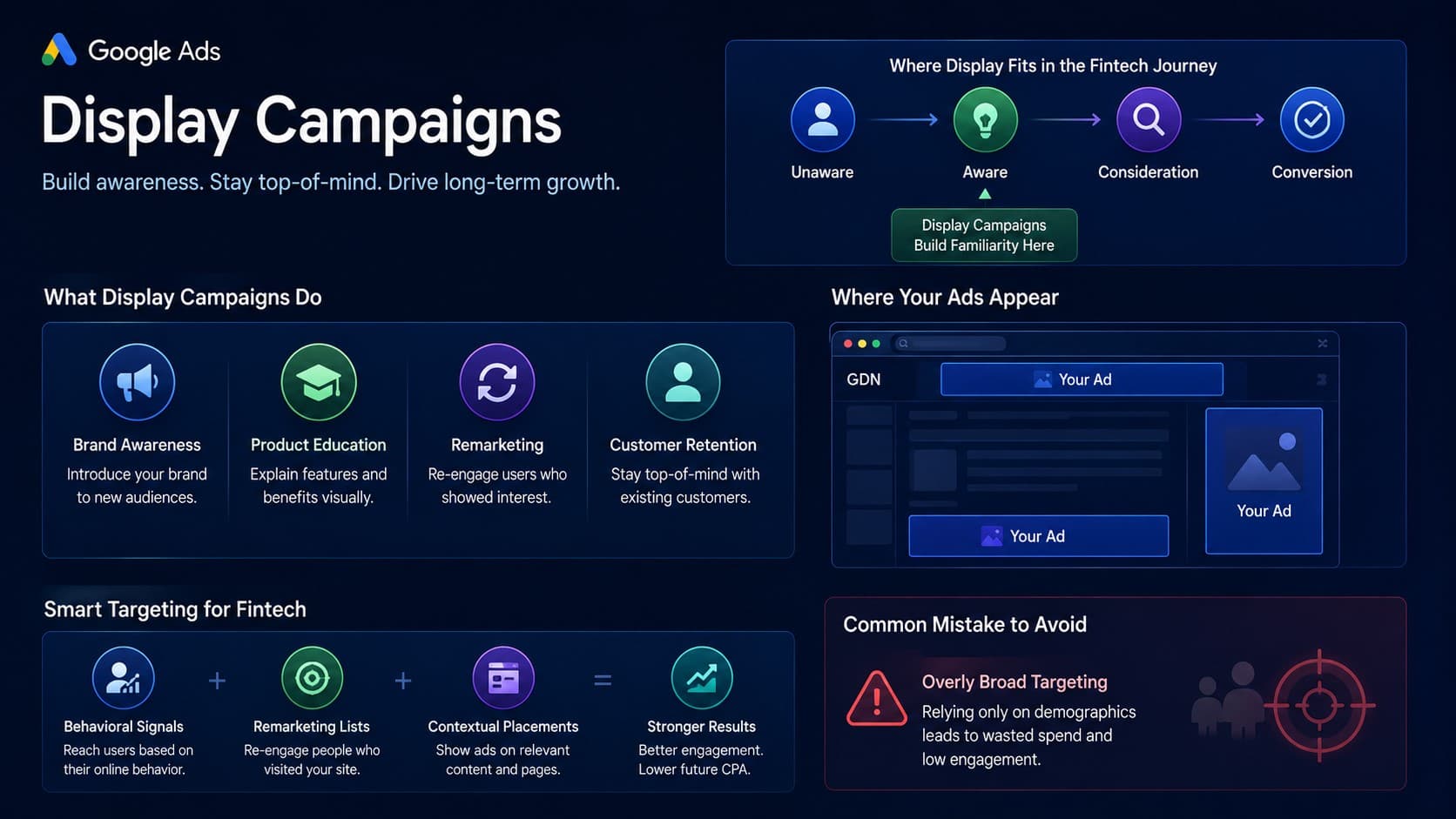
Display campaigns place visual advertisements across millions of websites within Google’s Display Network. Rather than capturing demand, they create familiarity with a financial brand before users begin actively comparing providers.
For fintech organizations entering competitive markets, Display often supports:
- Brand awareness
- Product education
- Remarketing
- Customer retention
Display campaigns generally produce lower conversion intent than Search, but they help reduce future acquisition costs by introducing brands earlier in the buying journey.
One common mistake is targeting overly broad audiences. Successful fintech audience targeting combines behavioral signals, remarketing lists, and contextual placements rather than relying only on demographic filters.
Video Campaigns
Video campaigns build credibility by demonstrating products before prospects reach comparison stages. Financial services often involve unfamiliar terminology or perceived risk, making visual explanations particularly valuable.
Educational videos perform well because they answer practical questions before asking users to convert. Short demonstrations explaining budgeting tools, digital wallets, or investment dashboards frequently outperform promotional messaging.
Video campaigns are especially effective for:
- Fintech product launches
- Mobile banking demonstrations
- Cryptocurrency education
- Financial literacy initiatives
Performance Max Campaigns
Performance Max uses Google’s machine learning to distribute advertisements across Search, Display, YouTube, Discover, Gmail, and Maps from a single campaign. Rather than manually assigning budgets to each channel, advertisers optimize toward one defined conversion goal.
Performance Max is useful for scaling mature accounts because it automates delivery across Google’s inventory. Its biggest limitation is reduced visibility into search queries, so advertisers need clean conversion tracking and stable data before using it aggressively.
Organizations beginning fintech PPC management often achieve better results by establishing stable Search campaigns before expanding into Performance Max.
Demand Gen Campaigns
Demand Gen campaigns help fintech brands reach potential customers before they begin actively searching. They combine Google’s visual inventory with audience signals based on interests, previous engagement, and online behavior.
Demand Gen campaigns often support:
- Product awareness
- Webinar registrations
- Financial education resources
- App consideration
- Newsletter growth
Advertisers using Demand Gen should focus on compelling creative assets because visual relevance has a much greater influence on performance than keyword targeting.
Choosing the Right Campaign Type
Rather than selecting one campaign format, successful fintech companies build complementary campaigns that reflect different customer intentions.
| Customer Stage | Recommended Campaign | Primary KPI |
| Awareness | Display, Video, Demand Gen | Reach and engagement |
| Consideration | Search, Remarketing | Qualified traffic |
| Conversion | Search, Performance Max | Cost per acquisition |
| Retention | Display Remarketing | Repeat engagement |
This layered approach allows Google Ads for financial technology companies to educate users early, capture demand when purchase intent appears, and maintain visibility throughout longer financial decision cycles.
Readers comparing Google Ads types should evaluate each campaign according to customer intent rather than expected traffic volume. The highest-performing accounts rarely rely on one campaign type alone because different formats solve different acquisition challenges.
Key Steps to Run an Effective Fintech Google Ads Campaign
Launching paid search campaigns in fintech is less about finding the perfect keyword and more about building a system that Google can trust and users are willing to engage with. High-performing accounts usually follow a structured optimization process instead of making frequent reactive changes.
The following steps reflect the workflow used by experienced advertisers to improve campaign quality, reduce wasted spend, and generate higher-quality financial leads over time.
Follow Google Ads Policies and Financial Compliance Requirements
Google’s financial advertising policies should be treated as campaign requirements rather than recommendations. Even minor violations can trigger ad disapprovals, account restrictions, or complete suspension, making compliance the foundation of every campaign.
Financial advertisers often focus on ad copy while overlooking landing pages. In practice, Google evaluates both. If pricing information is unclear, licensing details are missing, or the landing page contradicts the advertisement, campaign performance may suffer even when keywords and bids are well optimized.
Before launching a campaign, verify:
- Required financial disclosures
- Licensing information
- Privacy policy availability
- Secure HTTPS implementation
- Consistent messaging between ads and landing pages
| Compliance Check | Why It Matters | Common Mistake |
| Financial disclosures | Meets Google policy | Missing loan terms |
| Business verification | Establishes legitimacy | Incomplete company details |
| Landing-page consistency | Improves Quality Score | Different offer than ad |
| Privacy documentation | Builds trust | Missing privacy policy |
| Security certificates | Protects customer data | Expired SSL certificate |
Advertisers building a broader fintech marketing strategy should review compliance before scaling budgets because approval problems become more difficult to resolve after campaigns expand.
Choose One Clear Goal for Each Campaign
Every campaign should optimize toward one primary business objective. Combining lead generation, app installs, and newsletter subscriptions within the same campaign makes Google’s machine learning less effective because conversion signals become inconsistent.
Typical fintech campaign goals include:
- Account registrations
- Loan applications
- Mobile app installs
- Demo requests
- Verified customer onboarding
Each objective represents a different customer action and often requires different bidding strategies, landing pages, and messaging.
Campaign structure becomes much easier to optimize when every ad group contributes to a single measurable outcome.
Focus on High-Intent Financial Searches
Google Ads performs best when campaigns target users already searching for solutions rather than simply browsing financial information. Search intent often predicts conversion quality more accurately than search volume.
Instead of pursuing broad keywords such as “credit” or “investment,” experienced advertisers prioritize commercial searches that indicate readiness to act.
Examples of higher-intent searches include:
- Best loan app
- Open business bank account
- Online investment platform
- International payment solution
- Digital wallet for freelancers
A simple way to categorize search intent is to distinguish between informational, commercial, and transactional searches. Informational queries aim to explain a concept. Commercial queries compare options. Transactional queries indicate that a user is ready to open an account, apply, or sign up.
Campaigns focused on commercial and transactional intent generally deliver stronger fintech PPC campaigns than those built around educational keywords alone.
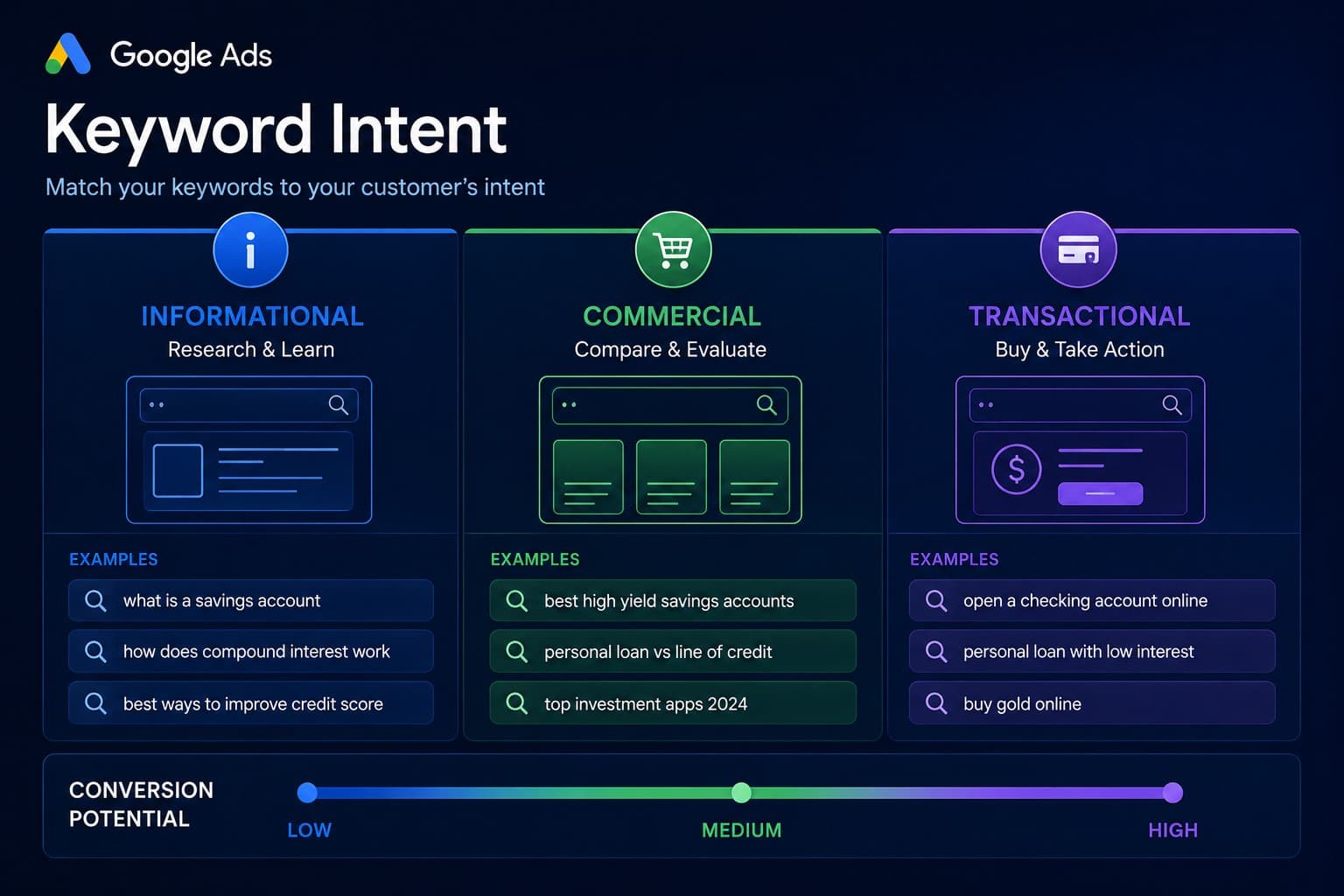
Readers evaluating whether Google Ads are worth it for financial products should recognize that campaign success depends more on keyword intent than total search volume.
Filter Out Low-Intent Traffic With Negative Keywords
Negative keywords prevent advertisements from appearing for searches unlikely to produce qualified customers. They are one of the simplest ways to improve campaign efficiency, yet many fintech advertisers rarely update them after launch.
Common exclusions include:
- Free
- Jobs
- Definition
- Wikipedia
- Meaning
- Salary
- Course
Negative keyword reviews should become a recurring optimization task rather than a one-time setup.
A practical review rhythm is simple. Check search terms weekly, expand negative keyword lists monthly, and review campaign themes quarterly. This approach optimizes your account without disruption and reveals unexpected traffic patterns.
Build Fintech Campaigns That Earn Trust
Many financial brands struggle with campaign performance because approval requirements, audience intent, and conversion optimization must work together rather than independently. NinjaPromo’s Fintech Google Ads services help businesses build compliant campaigns, improve lead quality, and create scalable acquisition strategies that support sustainable growth instead of short-term traffic spikes.

Start With Simple Smart Bidding Strategies
Most successful campaigns begin with Google’s automated bidding rather than complex manual adjustments. Early optimization depends more on collecting reliable conversion data than constantly changing bid settings.
A recommended progression is:
- Maximize Conversions
- Collect sufficient conversion history
- Transition to Target CPA
- Introduce ROAS optimization when revenue data becomes available
Frequent bid adjustments interrupt Google’s learning period and often reduce campaign stability.
Organizations investing in fintech PPC advertising should resist making optimization decisions based on only a few days of performance data.
Successful paid search campaigns rarely fail because of bidding strategy alone. Performance usually depends on whether advertisers combine compliant messaging, high-intent targeting, meaningful conversion tracking, and landing pages that reduce perceived financial risk.
Track Only Meaningful Conversions
Clicks, impressions, and page views measure activity, not business success. Financial advertisers should optimize campaigns around actions that indicate genuine customer intent.
Meaningful conversions usually include:
- Completed applications
- Verified accounts
- Qualified lead submissions
- Funded accounts
- Approved consultations
| Metric | Useful? | Reason |
| Clicks | Limited | Shows interest only |
| Form submission | Good | Indicates buying intent |
| Verified account | Better | Higher business value |
| Funded account | Best | Direct revenue signal |
The more accurately conversion values reflect business outcomes, the better Google’s automation performs over time.
Businesses reviewing their Google Ads audit should confirm that conversion tracking measures revenue-driving actions instead of superficial engagement metrics.
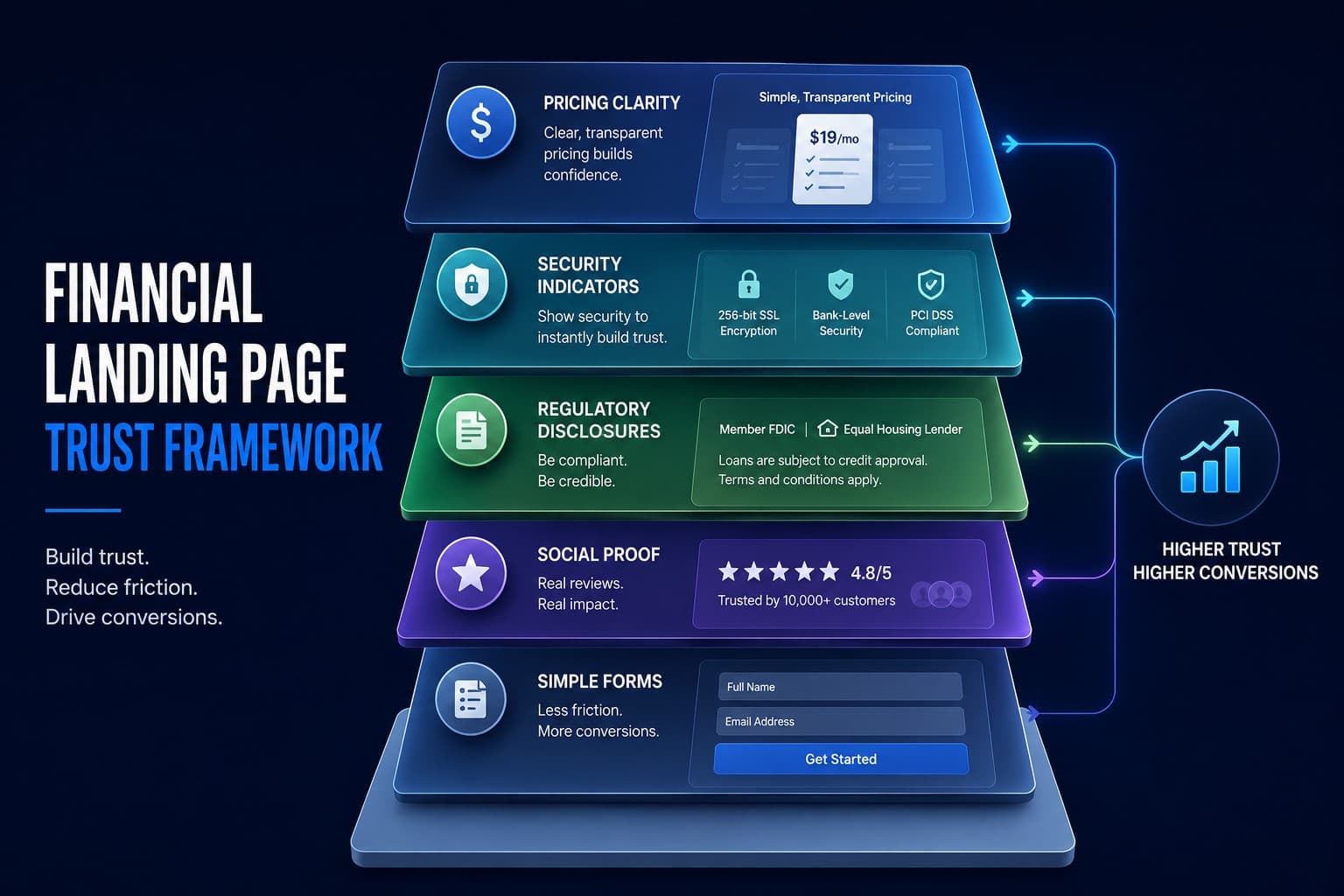
Build Landing Pages That Drive Trust and Conversions
Users typically decide within seconds whether a financial website appears trustworthy. Strong advertisements cannot compensate for confusing landing pages or unclear product information.
High-converting fintech landing pages usually include:
- Clear value proposition
- Transparent pricing
- Regulatory information
- Customer reviews
- Visible security indicators
- Short application forms
Every additional distraction creates another opportunity for users to abandon the process.
Landing-page optimization should therefore be treated as part of fintech Google Ads optimization, not as a separate website project.
Related Article: Top Google Ads Alternatives to Boost Your Reach
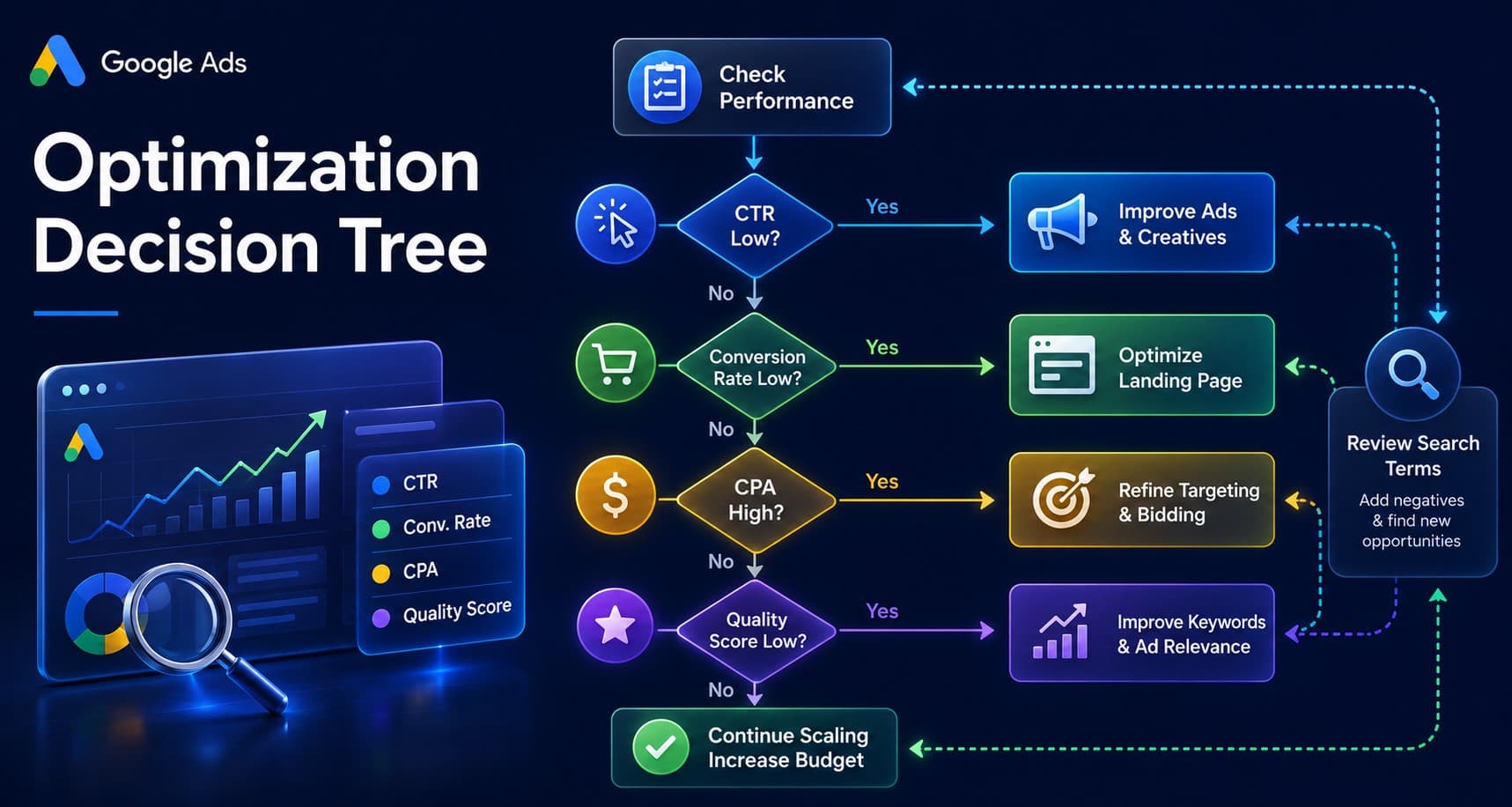
Optimize Campaigns Using Search Terms Data
Keyword research provides starting assumptions. Search term reports reveal what users actually typed before clicking an advertisement, making them one of the most valuable optimization resources available inside Google Ads.
Regular search-term analysis helps advertisers:
- Discover profitable keywords
- Expand negative keyword lists
- Improve ad relevance
- Refine audience intent
- Reduce wasted budget
Campaign optimization should be continuous. Small adjustments based on real search behavior usually outperform major account restructures.
Businesses evaluating Google advertising costs often reduce acquisition expenses more effectively through search-term optimization than by lowering bids.
How Fintech Brands Achieve Growth With Google Ads
Well-structured paid search campaigns generate more than traffic. When campaigns align with business goals, audience intent, and trustworthy landing pages, they help financial brands increase visibility while attracting users who are more likely to convert.
Credible
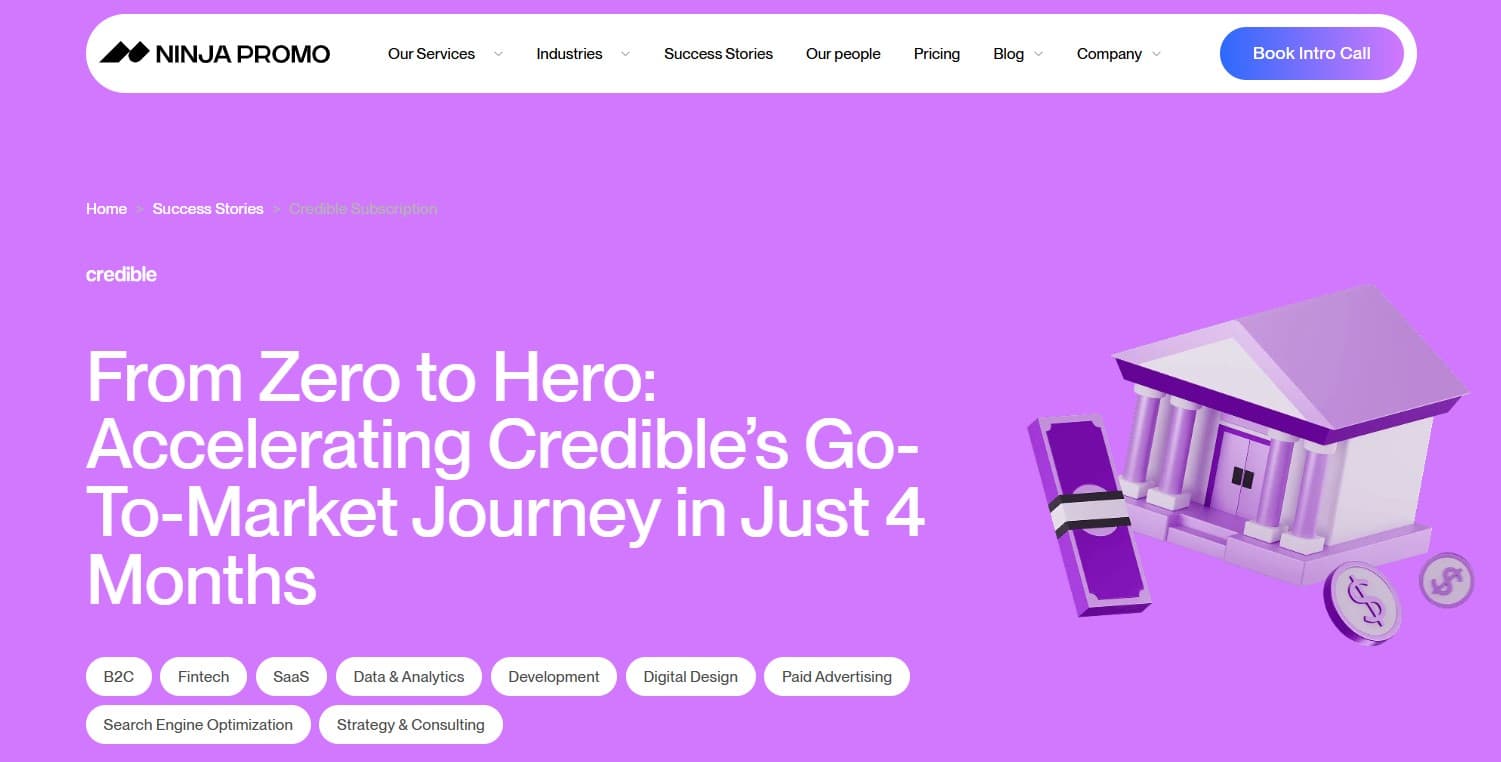
Credible wanted to strengthen its digital presence while increasing awareness among users comparing financial products. Rather than relying solely on broader awareness initiatives, the campaign strategy focused on attracting qualified search traffic supported by relevant landing experiences.
Campaign execution emphasized several priorities:
- Matching ads with high-intent searches
- Improving landing-page relevance
- Refining audience segmentation
- Optimizing campaign performance using ongoing search-query analysis
As campaign data accumulated, optimization decisions became increasingly driven by real user behavior instead of assumptions. Search terms that generated qualified traffic received greater budget allocation, while low-intent queries were gradually excluded through expanded negative keyword lists.
This disciplined optimization approach helped improve campaign efficiency while strengthening overall brand visibility. More importantly, advertising performance became increasingly predictable because campaign decisions were based on measurable conversion.
Wafee
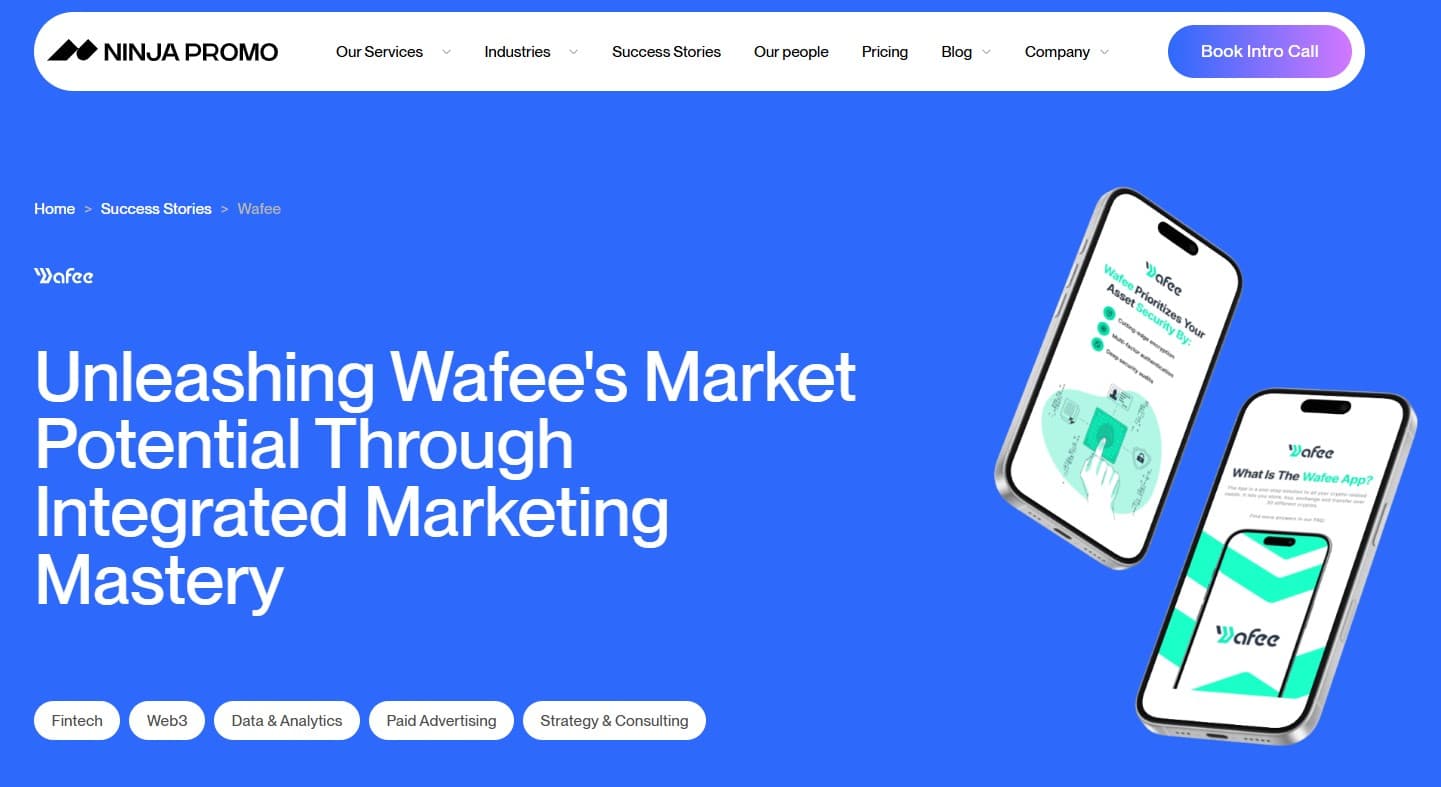
Wafee entered a competitive fintech environment where customer trust played an equally important role as visibility. Rather than maximizing impressions alone, campaign planning prioritized attracting users already researching relevant payment solutions.
Wafee’s optimization strategy focused on four key areas: refining search intent, aligning landing pages, tracking conversions, and refining the audience. These changes helped the campaign prioritize qualified prospects, boost user confidence, and reduce wasted spending.
As campaigns matured, ongoing optimization concentrated on improving conversion quality rather than increasing raw traffic. Search-term analysis, audience refinement, and incremental bidding adjustments helped allocate budget toward users demonstrating stronger commercial intent.
The result was an acquisition strategy built around qualified opportunities instead of vanity metrics, making it more efficient. This reflects a key benefit of a fintech digital advertising strategy: optimization based on customer behavior rather than assumptions made during campaign setup.
Final Thoughts
Running successful Google Ads for fintech companies requires much more than choosing keywords or increasing advertising budgets. Successful fintech Google Ads programs also depend on continuous optimization, accurate conversion tracking, and landing pages that reinforce customer trust.
Fintech organizations that treat campaign optimization as an ongoing process rather than a one-time setup are better positioned to improve lead quality, reduce wasted spend, and scale acquisition while remaining compliant with Google’s financial advertising requirements.


